
Article Content: Creatine Monohydrate Egypt Guide for Beginners
If you keep hearing about creatine at the gym, you are not alone. Creatine monohydrate is one of the most studied sports supplements in the world, and it is used for one simple reason: it can help you do a little more work in hard training. That often means a few extra reps, a bit more weight, or faster sprint performance. Over time, those small wins can add up.
This guide is for beginners in Egypt who want a clear, safe plan. You will learn what creatine monohydrate is, how to take it, what changes you may notice in the first month, and how to avoid common mistakes. You will get a simple checklist for choosing a product, plus links to real examples you can buy online in Egypt.
Here is what you need before you start:
A kitchen scale or a scoop you trust (3 g and 5 g are common daily amounts).
A water bottle you actually finish each day.
A basic training plan (even 3 days a week is enough to benefit).
Patience for at least 3–4 weeks.
The key idea is easy: creatine works best when you take it regularly. Timing is not a big deal for most people. The daily habit matters more than the exact minute you take it.
In Egypt, heat and busy days can make hydration tricky. Creatine does not “dry you out”, but training hard in warm weather plus low water intake can make you feel rough. So keep it simple: drink water across the day, not just during training. If your urine is very dark, that is a sign you likely need more water.
Before we get into doses, one important note: creatine is not a magic shortcut. If your sleep is poor, your food is random, and your training is inconsistent, creatine will not fix that. Think of it like a small upgrade that supports good training.
In research, the fastest way to fill your muscles with creatine is a short loading phase, then a small daily dose to keep levels high. Many people skip loading and still get the same benefit, just a bit slower. The International Society of Sports Nutrition describes common dosing options and ranges in its position stand on creatine.
A small heads-up about expectations: creatine is not a fat burner. Some people see the scale go up in the first week or two. That is usually water stored inside the muscle, not body fat. Many gym people like that look, and that can make muscles appear a bit fuller.
If you want to see a product example on our store, here is DY Nutrition Creatine Monohydrate (unflavoured). You can browse more options in the Shop section too.
What creatine monohydrate is and why gym people use it
Creatine is a substance your body already carries. Your liver and kidneys make some, and food can add a small amount too (mainly red meat and fish). In muscle, creatine is stored mostly as phosphocreatine. This store helps your body rebuild energy very fast during short, hard efforts.
In the gym, that matters during heavy sets and sprints. Your muscles run on ATP. ATP runs low quickly in high-intensity work. Phosphocreatine helps rebuild ATP in the first seconds of a hard effort. With higher muscle creatine stores, many people can hold strong output for a little longer. In real training, that may look like one extra rep, a cleaner last rep, or the same reps with less drop-off.
Creatine monohydrate is the go-to form in research. It is stable, widely tested, and tends to cost less than trendy forms. For most lifters, starting with monohydrate keeps things simple.
Creatine is useful for:
Strength training (hard sets of 3–12 reps)
Short bursts (sprints, jumps, short intervals)
Extra weekly training volume (more quality work over time)
Creatine is not useful for:
Replacing good food, sleep, or a training plan
Burning fat on its own
Acting like a hormone or steroid
What about “bloating”? Some people gain a little water inside muscle cells. That is normal. It is not the same thing as fat gain. Many lifters even like the slightly fuller look in a T-shirt.
Safety is a big topic, and it matters. The International Society of Sports Nutrition has a position stand that reviews creatine research and reports strong evidence for safety and benefit in healthy people at common doses.
How much to take (loading vs no loading)
For most people, creatine is simple: you take a small amount every day, and over time your muscles store more of it. The only real choice is whether you want to “load” (fill up faster) or skip loading (fill up slower, but simpler).
Option A: No loading (easy and works)
This is the best choice for most beginners.
Take 3–5 grams per day, every day
Keep doing it for at least 4 weeks
Results build up steadily
If you are smaller or you are not training very hard yet, 3 g daily is a good start. If you are heavier or training hard, 5 g daily is the common choice.
Option B: Loading (faster, but more hassle)
Loading can fill muscle creatine stores faster, but it is not required.
Take about 20 g per day for 5–7 days
Split it into 4 doses of 5 g (morning, midday, afternoon, evening)
Then switch to 3–5 g per day as a maintenance dose
Some people feel stomach upset during loading, especially if they take a big dose all at once. If that happens, reduce the dose, split it more, or skip loading completely.
These dosing options are the standard ones described in the International Society of Sports Nutrition (ISSN) position stand on creatine. (tandfonline.com)
Easy dosing examples (keep it practical)
If you do not want complicated maths, use this:
Most beginners: 5 g daily
Smaller beginners: 3 g daily
Loading choice: 5 g, 4 times daily for one week, then 5 g daily
If you really want a bodyweight-style method, a common approach is:
Maintenance: roughly 0.03 g per kg per day
Loading: roughly 0.3 g per kg per day for 5–7 days
(Again, you do not need to calculate this unless you enjoy numbers.)
Quick rules to avoid mistakes
Do not keep “loading” for weeks. One week is enough if you choose it.
Do take creatine daily, even on rest days.
Do drink water across the day, especially in Egypt’s warm weather.
Do not panic if the scale goes up a bit early on. That is usually water stored in muscle.
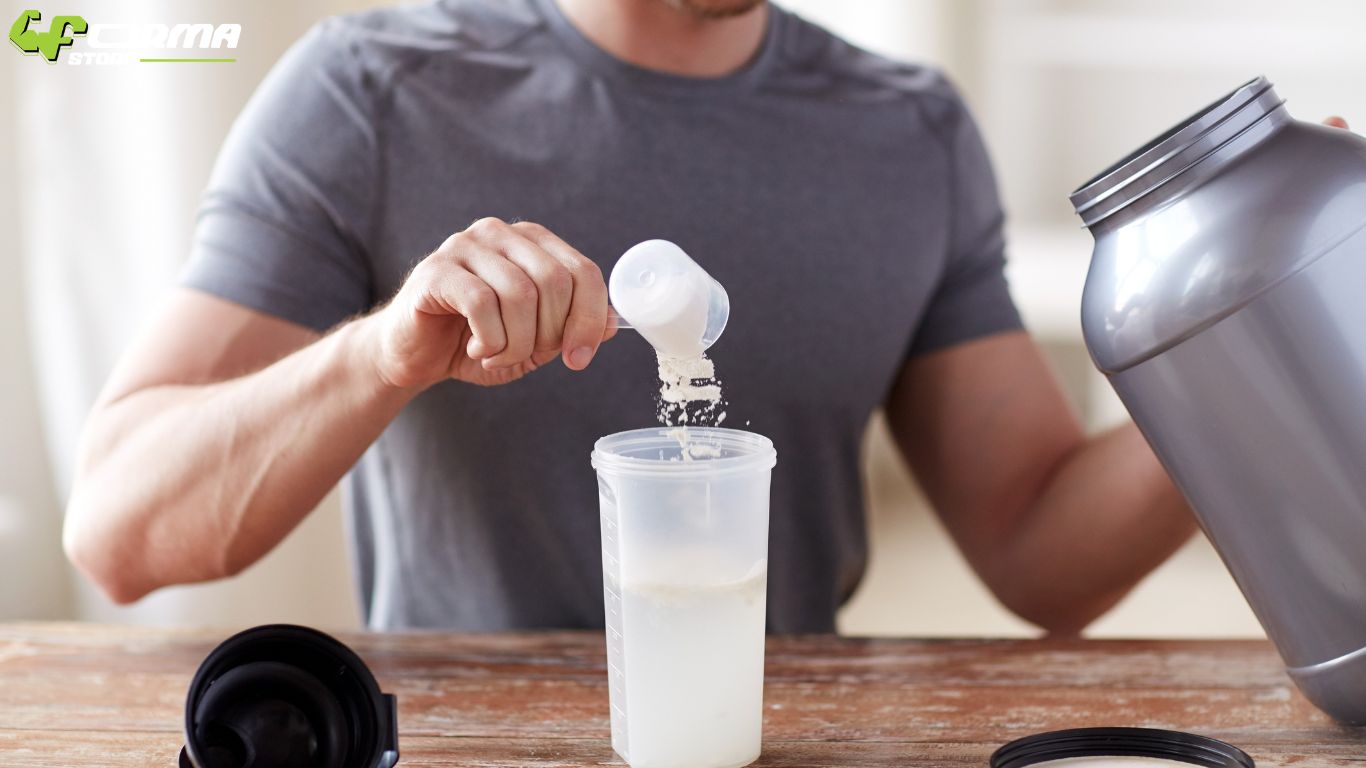
If you want to make the daily habit easier, using a shaker bottle helps because creatine can settle at the bottom if you stir it once and leave it. You can find a shaker on our shop here.
When to take creatine (morning, pre, post)
Most people overthink creatine timing. The truth is simple: take it every day and you are already doing the most important part.
Creatine works by slowly raising the amount stored in your muscles. Once your muscles are “topped up”, the exact timing matters far less than it does for things like caffeine. So if you can only remember one rule, make it this:
Best time to take creatine is the time you will actually stick to.
Good timing options (pick one)
1) With your first meal (easy habit)
Take 3–5 g with breakfast or lunch.
This works well if you train at random times.
2) After training (simple gym routine)
Take 3–5 g after your workout.
Many people already drink something after training, so it is easy to attach the habit.
3) Any time on rest days
Take your daily dose at the same time as usual.
Rest days still count. Skipping slows progress.
Should you take it before a workout?
You can, but do not expect a “buzz” or instant kick. Creatine is not like pre-workout. If taking it pre-gym helps you remember, that is a good reason.
Should you mix it with protein or carbs?
You can. It is fine in water, juice, or a protein shake. Some people find it sits better with food. The key is still daily consistency.
How to mix it so it’s not annoying
Creatine monohydrate can settle at the bottom of a glass. You have a few easy fixes:
Mix it in warm water, then top up with cold water.
Use a shaker bottle and shake again right before you drink the last bit.
If it tastes “gritty”, that is normal with monohydrate.
A shaker can make the habit easier, especially if you sip it over time.
Hydration tip for Egypt
Creatine does not “dehydrate” you, but training hard in warm weather while drinking too little can make you feel tired and headache-y. Keep it basic:
Aim to drink water across the day
Add more water on training days
If you sweat a lot, add salt in food (or an electrolyte drink sometimes)
The ISSN creatine position stand supports that common daily dosing works well and is widely studied.
What results to expect in 1–4 weeks
Creatine is not the kind of supplement you “feel” on day one. It works more like filling a tank. Once your muscles store more creatine, hard training can feel slightly easier to repeat, and your performance drop-off can be smaller.
Here is a realistic timeline for most beginners using creatine monohydrate Egypt routines (3–5 g daily).
Week 1: the scale may change before your strength does
In the first week, some people notice the scale move up a little. This is usually water stored inside muscle, not fat gain. Not everyone sees it, but it is common enough that you should expect it and not panic.
What you might notice:
A slightly “fuller” look in your muscles
A small weight change (not always)
No big change in strength yet (that is normal)
If you did a loading phase, changes can show up a bit faster. The ISSN position stand explains that creatine raises intramuscular creatine stores, which is the reason it can support high-intensity performance once stores are higher.
Week 2: more “good reps” on hard sets
This is where many people start seeing the real point of creatine. It is not a sudden jump like a pre-workout. It is more like you can keep your best effort for longer.
What you might notice:
Your last set is not as terrible as usual
You can sometimes add 1 rep on a key lift
Short bursts (like sprints) feel easier to repeat
Weeks 3–4: steady progress becomes easier to keep
By weeks 3–4, your creatine stores are usually higher if you took it daily. That helps you do a bit more total work over the week, and that is what builds results.
What you might notice:
More consistency in performance across the week
Slightly faster strength progress (when training is solid)
Better “training tolerance” (you recover from hard sessions a bit easier)
What creatine will not do (so expectations stay sane)
Creatine does not:
Replace sleep
Fix a bad programme
Melt fat off your body
If fat loss is your goal, creatine can still help because it may support training quality while you diet. But the fat loss comes from your calorie plan and consistency, not from creatine itself.
A simple way to track if it’s working
Do this for 4 weeks:
Pick 2 lifts you repeat weekly (example: bench press + squat)
Write down sets, reps, and weight
Track one simple number: “best set reps at a fixed weight”
If that number trends up faster than usual, creatine is probably helping.
If you want to start today, go to our DY Nutrition creatine monohydrate page and use the daily dosing in this guide as your plan.
Side effects and who should skip creatine
For most healthy gym-goers, creatine monohydrate has a strong safety track record at normal doses. That said, you still want to use it in a smart way, especially if you are new to supplements. The goal is simple: get the benefits without guessing.
Common side effects (and how to fix them)
1) Stomach upset
This usually happens when people:
take too much at once
do a loading phase and rush big doses
mix it badly and drink it too fast
What to do:
switch to 3–5 g daily (no loading)
split your dose (example: 2.5 g + 2.5 g)
take it with food
2) The scale goes up
Some people gain a bit of weight early on. This is often water stored inside muscle, not fat. If you are cutting, it can feel annoying, but it does not mean you failed. If your waist and mirror look the same and your training is improving, you are fine.
3) “Bloating” feeling
A lot of the time this is not real bloating. It is either:
more water inside muscle
stomach irritation from large doses
Fix:
keep the dose small and steady
drink water across the day
avoid loading if it makes your stomach feel off
The ISSN position stand reviews these points and supports that creatine is widely studied and generally well tolerated in healthy people at standard dosing.
Who should skip creatine (or speak to a doctor first)
Creatine is not “dangerous”, but it is not for everyone. Do not start without medical advice if you have any of these:
Kidney disease or a history of kidney problems
You are pregnant or breastfeeding
You are under 18 (ask a doctor or a qualified sports nutrition professional first)
You take medicines that affect kidneys, or you have a condition where your doctor monitors kidney function
Also, if you have ongoing stomach issues, start with the smallest dose (3 g) and see how you feel.
Simple safety checklist (easy and practical)
If you want creatine monohydrate Egypt users’ results without problems, follow this checklist:
Take 3–5 g daily (no need to overdo it)
Drink water across the day (especially in hot weather)
Do not “load” if it upsets your stomach
Stick to one product and one routine for 4 weeks
If anything feels wrong, stop and get advice
How to avoid low-quality products
Creatine monohydrate should be boring. That is a good thing. Look for:
Creatine monohydrate clearly listed (not a “proprietary blend”)
clear servings and grams per scoop
a simple ingredient list
If you want a straightforward starting point, check the DY Nutrition Creatine Monohydrate page on Forma Store Egypt and follow the 3–5 g daily plan from this guide.
How to pick a creatine product in Egypt (what to check before you buy)
When you shop for creatine, the best choice is usually the simplest one. Creatine monohydrate is meant to be boring. If a tub looks “too fancy”, claims crazy results, or hides the dose, skip it.
Here’s a quick checklist you can use in 60 seconds.
1) Look for one main ingredient: creatine monohydrate
On the label, you want to see Creatine Monohydrate clearly written as the main ingredient.
Try to avoid products that:
hide the dose inside a “blend”
mix creatine with lots of extras you did not ask for
don’t tell you how many grams you get per serving
For beginners, pure creatine monohydrate is the easiest way to start, because you can control your dose (3–5 g daily) without guessing.
2) Check the grams per serving (this is the money line)
A good product makes the serving size obvious. You want to know:
How many grams of creatine are in one scoop
How many servings are in the tub
Whether the scoop is close to 3 g or 5 g (both are fine, you just adjust)
If a label makes you work hard to find this info, that’s a red flag.
3) Unflavoured is often the safest first buy
Flavoured creatine can be fine, but it adds sweeteners and flavouring that some people don’t tolerate well. If you’re new, unflavoured keeps things simple:
easy to mix in water
easy to add to a protein shake
fewer ingredients to upset your stomach
4) Think about your routine, not “perfect timing”
The “best” creatine is the one you will take every day. So pick something that fits your habits:
If you like water: go unflavoured and mix it fast
If you already use a shaker: add it to your daily shake
If you travel a lot: keep a small scoop or measured baggie ready
A shaker helps because creatine can settle at the bottom. If you want a simple setup, you can add a shaker to your routine from our shaker bottle page and keep your daily dose easy.
5) Buy from a store that makes product info clear
In supplements, trust is part of the product. You want:
clear product naming
clear serving info
clear usage directions
a real way to contact the store if you need help
If you want a clean starting point, you can use our DY Nutrition creatine monohydrate page, then follow the exact daily dose from this guide (3–5 g daily).
Quick buying summary
If you want the simplest, lowest-stress choice:
choose creatine monohydrate
aim for 3–5 g daily
skip loading if your stomach is sensitive
keep it consistent for 4 weeks
FAQ: creatine monohydrate Egypt (beginner questions)
Can I take creatine with coffee?
Yes. Creatine does not need a special drink. You can take it with water, juice, or alongside coffee. If coffee upsets your stomach, take creatine with food instead.
Do I need to cycle creatine?
Most people do not need to cycle it. Creatine works by keeping your muscle stores higher, so a steady daily dose is the normal approach. If you stop, your stores slowly return to normal over time, and you may notice performance feels more “normal” again.
Should I take creatine on rest days?
Yes. Rest days still count. Creatine is about building and maintaining muscle stores, not “boosting” one single session.
Is it okay to take creatine during Ramadan?
Many people do. Keep it simple:
Take 3–5 g with iftar or suhoor
Drink water steadily between iftar and suhoor
If you train late, taking it after training is fine too
Can women take creatine?
Yes. Creatine is not a male-only supplement. The basics are the same: 3–5 g daily, consistent use, and a proper training plan.
Does creatine cause hair loss?
There isn’t strong proof that creatine directly causes hair loss in the general population. People usually link this to one small study idea about hormones, but that’s not the same as real-world proof of hair loss. If hair loss runs in your family and you feel worried, you can skip creatine or speak to a doctor for peace of mind.
Does creatine harm kidneys?
In healthy people, creatine at standard doses has a strong safety record in research. If you have kidney disease or a history of kidney problems, do not use creatine unless your doctor says it’s okay. The ISSN position stand reviews safety data and supports that creatine is generally safe for healthy people at common doses. (tandfonline.com)
What if I miss a day?
Do not stress. Just take your normal daily dose the next day. Do not “double dose” to punish yourself. Consistency over weeks matters more than one missed day.
What’s the simplest beginner plan?
If you want the easy version:
Buy a straightforward creatine monohydrate
Take 5 g daily
Do it for 4 weeks
Track one lift and aim to improve slowly
If you want to start with a clean, simple product, visit our DY Nutrition creatine monohydrate page and follow the 5 g daily routine from this guide.
Wrap-up: your 4-week creatine plan
If you want the simplest way to use creatine monohydrate Egypt routines without stress, do this:
Take 5 g daily (or 3 g daily if you’re smaller or your stomach is sensitive)
Take it every day (training days and rest days)
Drink water across the day, especially in warm weather
Track one or two lifts for 4 weeks and look for steady progress
When you’re ready to start, go to our DY Nutrition creatine monohydrate product page, add it to your routine, and follow the daily dose in this guide.
https://formastoreegypt.com/product/creatine-dy
You can also browse more supplement options in the shop here:
https://formastoreegypt.com/shop